Our journey, Moscow to Vladivostok, September 2015.
Travelling via the Trans-Siberian Railway route, with stops along the way.

Every journey of discovery has to start somewhere.
Ours began at Moscow’s Yaroslavsky Station at the Zero Km mark of the longest railway line in the world. Simon and John in front of the two joined locamotives at the fron of a very long line of carriages.
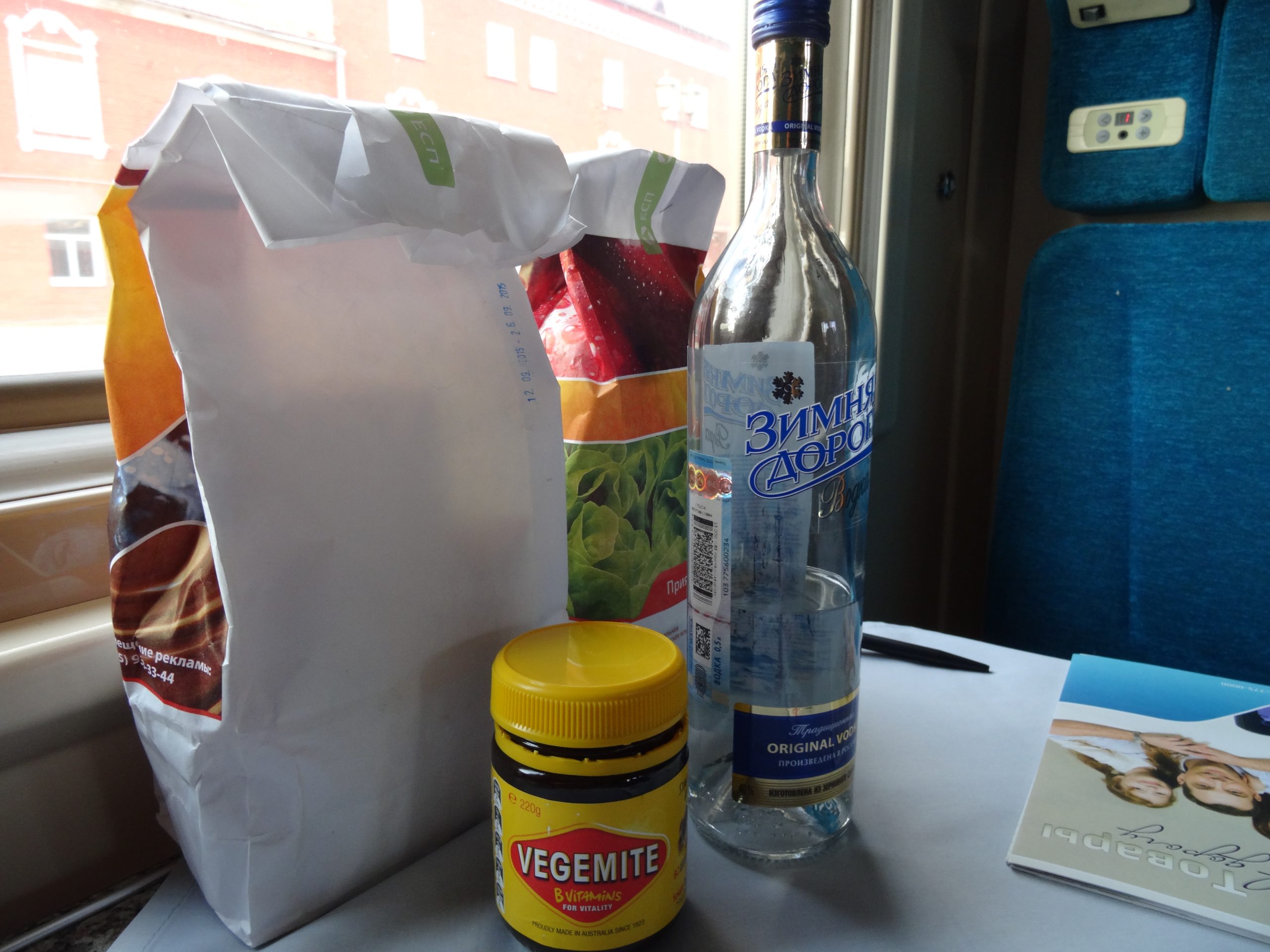
Vodka & Vegemite
This was the name created for our blog site we kept updated during the month-long trip through Russia. Some of you may remember these blogs. For Australian readers iconic ” Vegemite” needs no explanation, but for others, this greasy substance is truly a mystery and symbolic of our country. The link of vodka to Russia needs little explanation.
We placed these on the table of our sleeping compartment as the train was exiting Moscow station. Just as we were taking the photo, the providnista carriage attendant appeared and admonished us. “Put away vodka”, she shouted, ” you no drink”. Or, words to that effect.
The Trans-Siberian was once known as the ” Vodka Express”, where you got on board, drank heavily for nine days and nine nights, and then were poured off at the end. Mr Putin decreed this would end. The iron fist came down, and drinking was banned in all but the dining carriage. Even the bars and the station kiosks were closed for alcohol sales when the train came through. Such was the power of the President, even then.
Thankfully for the journey, our rather large, but lovely carriage attendent did turn a blind eye. But don’t tell Vladimir.
Moscow Underground
The descent into Moscow’s underworld – a labrynth of stations and tunnels beneath the city. The escalator going down into the bowels of the earth, deep enough to survive a nuclear attack. At the bottom, huge thick sliding iron doors waiting to be activated that will seal off the occupants from the blast of radiation. The threat of first-strike capability ever-present on their mind, and makes up part of their psyche and view of the west.
The Moscow Underground stations are works of art, with vaulted ceilings highly decorated, mosaic art works depicting selective historical events, and agricultural products and costumes from various regions.


Red Square(outside) St Basils Cathedral


Military Tattoo in Red Square celebrating the 70th anniversary of the end of World War 2
We were lucky enough to be in Moscow, and get tickets for the Military Tattoo. With the backdrop of the Kremlin, and St Basil’s lit up for the occasion, the event was a special treat.


Yekaterinburg
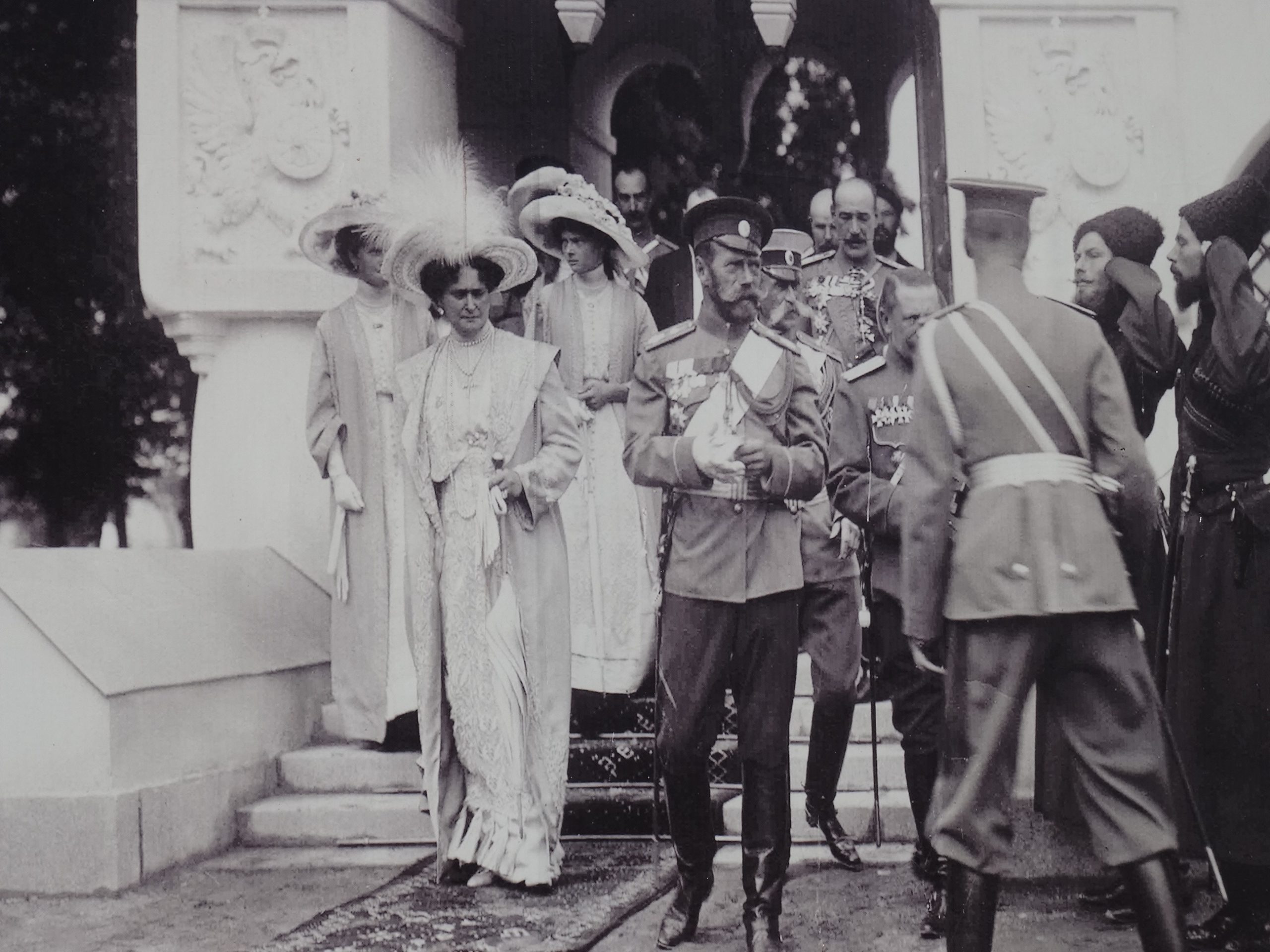
On the eastern side of the magnificent Ural Mountains, Yekaterinburg marks the geographical divide between Europe and Asia. It is also the site of the Church of the Blood, built in the early 21st Century on the site of the 1918 Romonov executions. A photo from the collection within the church.
Barnaul
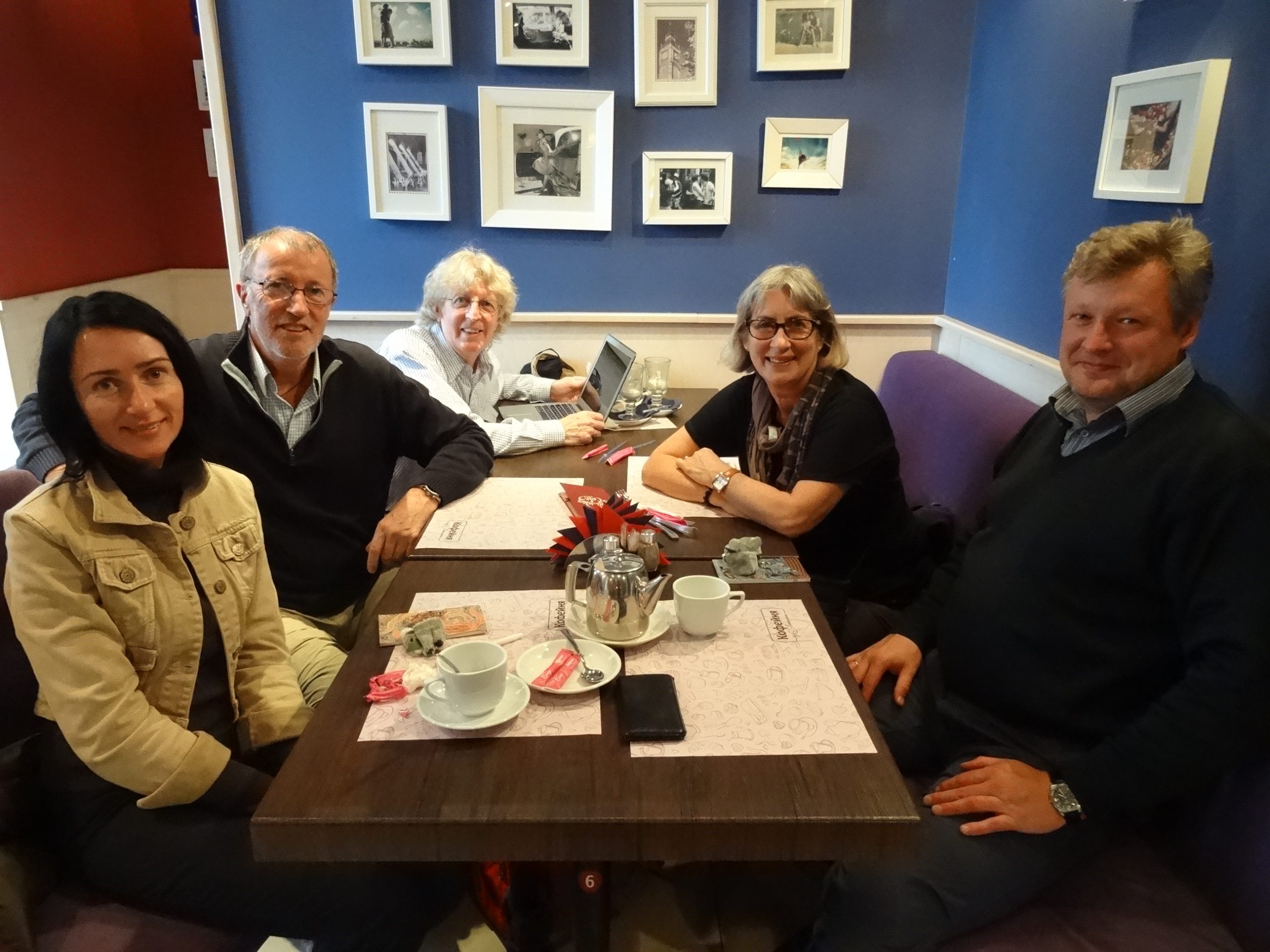
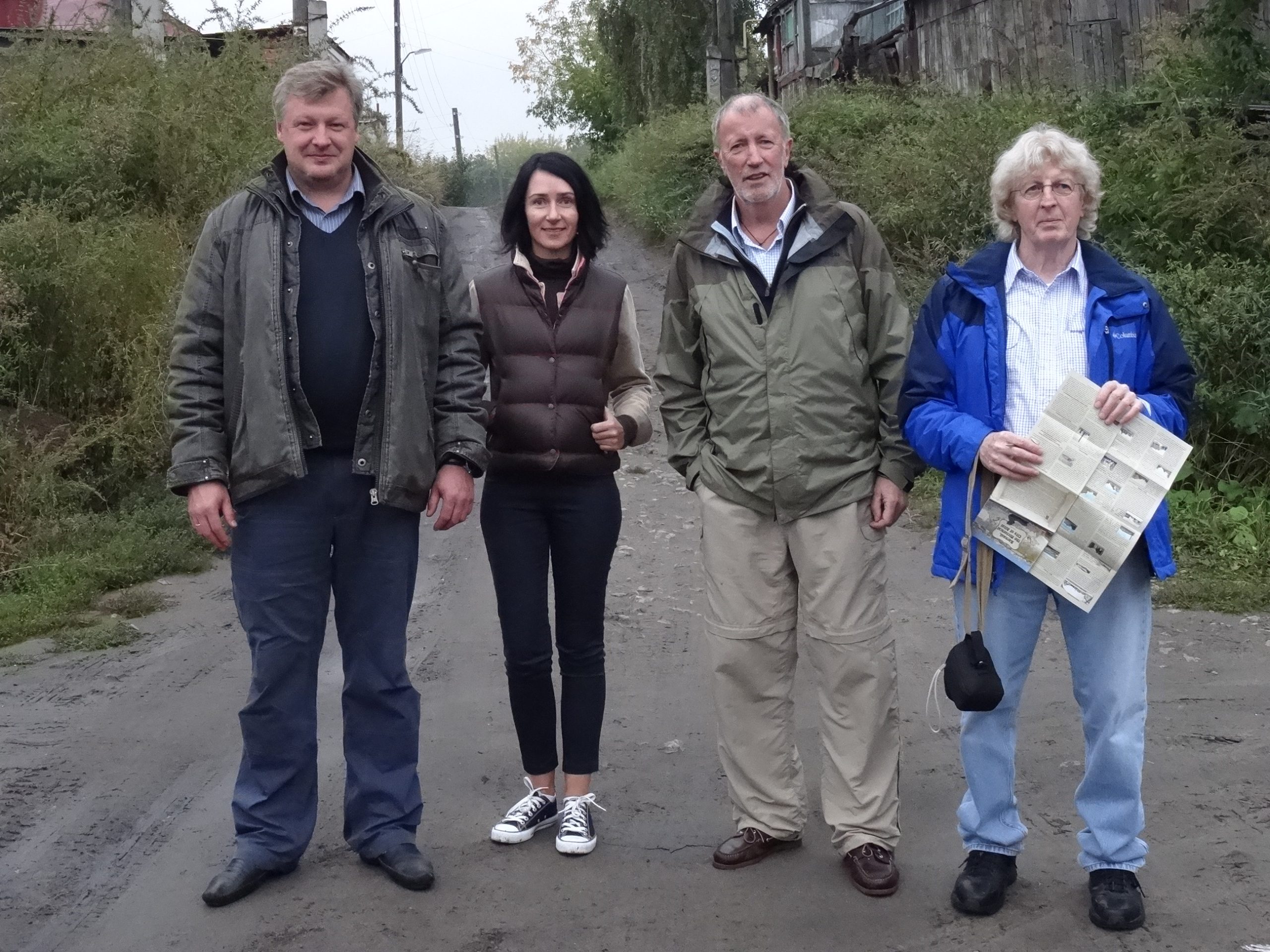
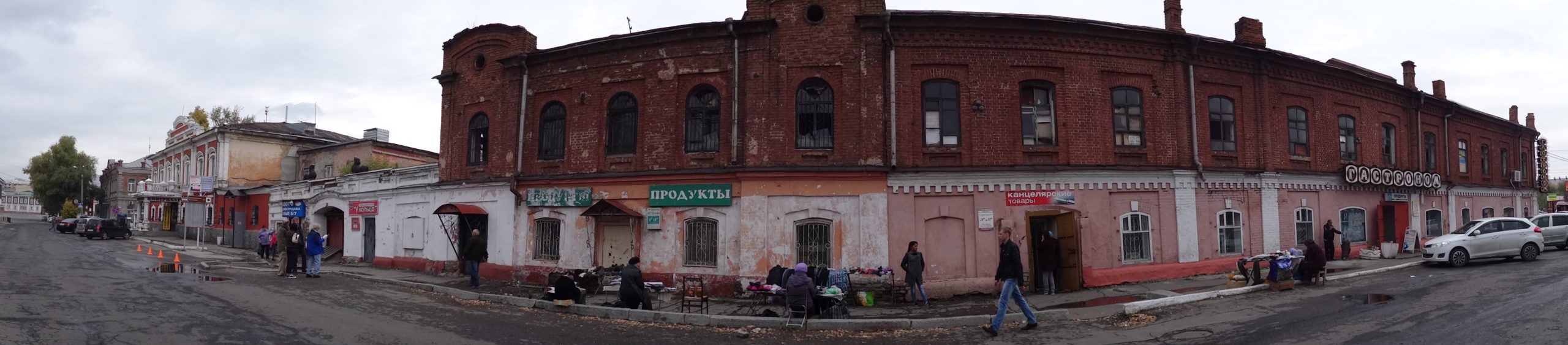
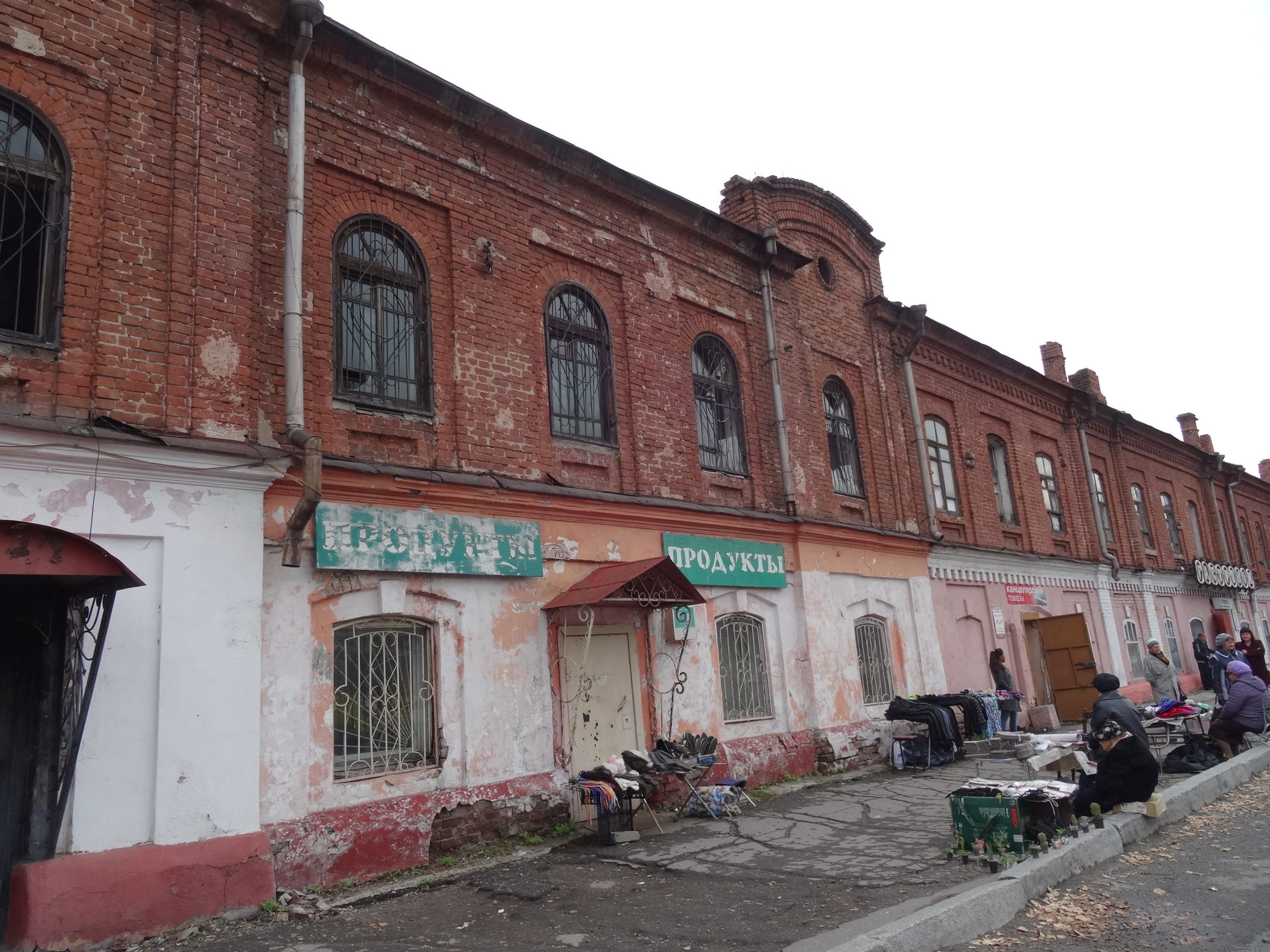
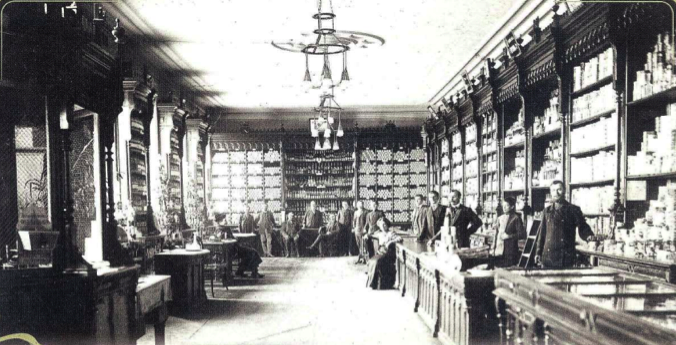
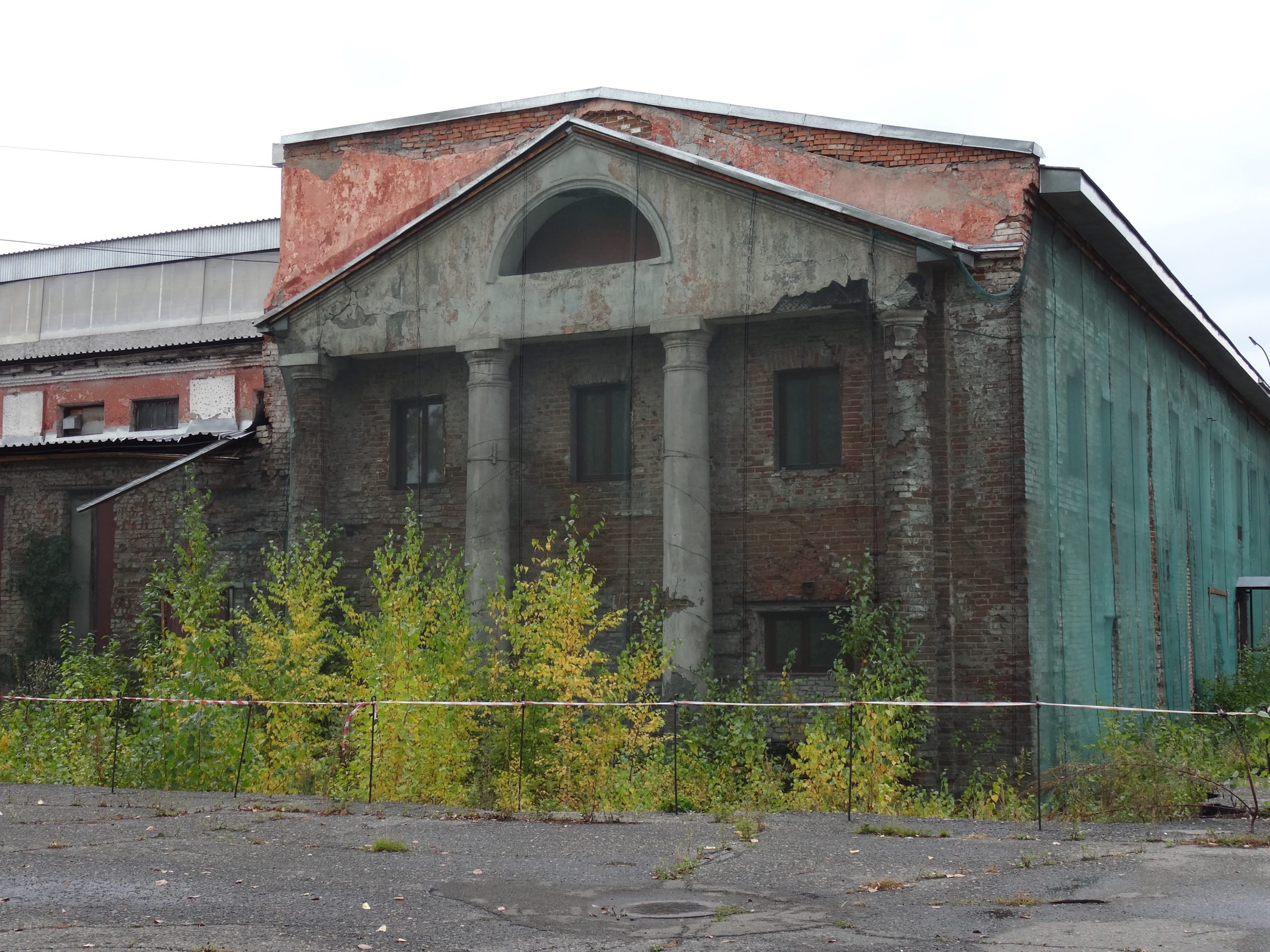
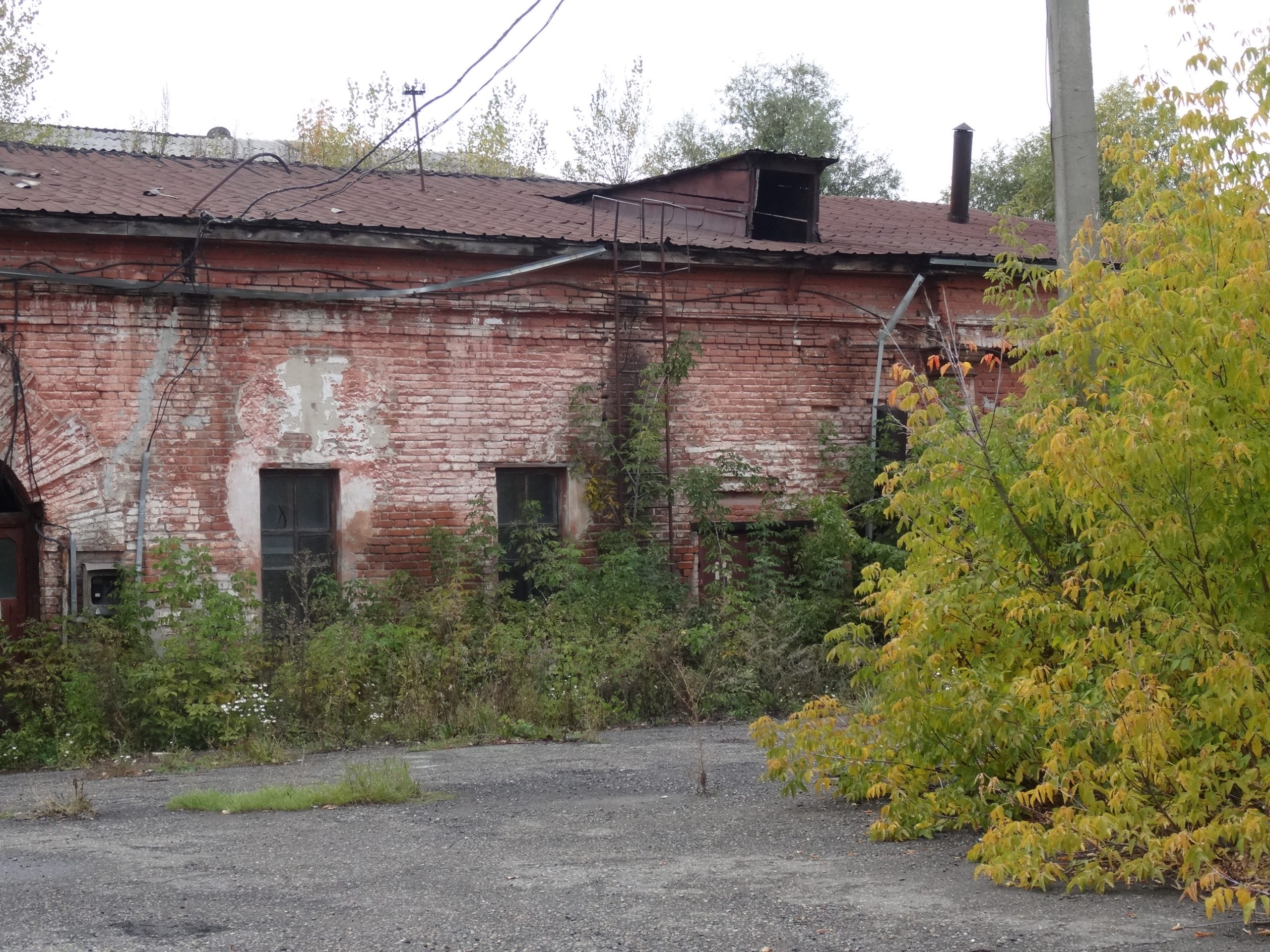
A side detour from Novosibirsk by rail to Barnaul, the home of the Sukhov family. Three days with Professor Sergey Manskov and Maria Maumova from the Barnaul University History Department gave us an insight to the lives of the family. We visited the location of the Sukhov store, still standing today; their datcha at Sukov Lane ( second home located in a countryside area) located in the street named after their family. We were also fortunate to be taken to the site of the Silver Smelting Factory, the church where they worshipped, and the hospital location. All significant sites in the battle to save Barnaul.
Photos: meeting with Professor Manslov and Maria, Professor Manskov, Maria, Simon and John in Sukhov Lane; the store, and a photo of the store from inside from archival records, the site of the Silver Smelting Factory.
Irkutsk
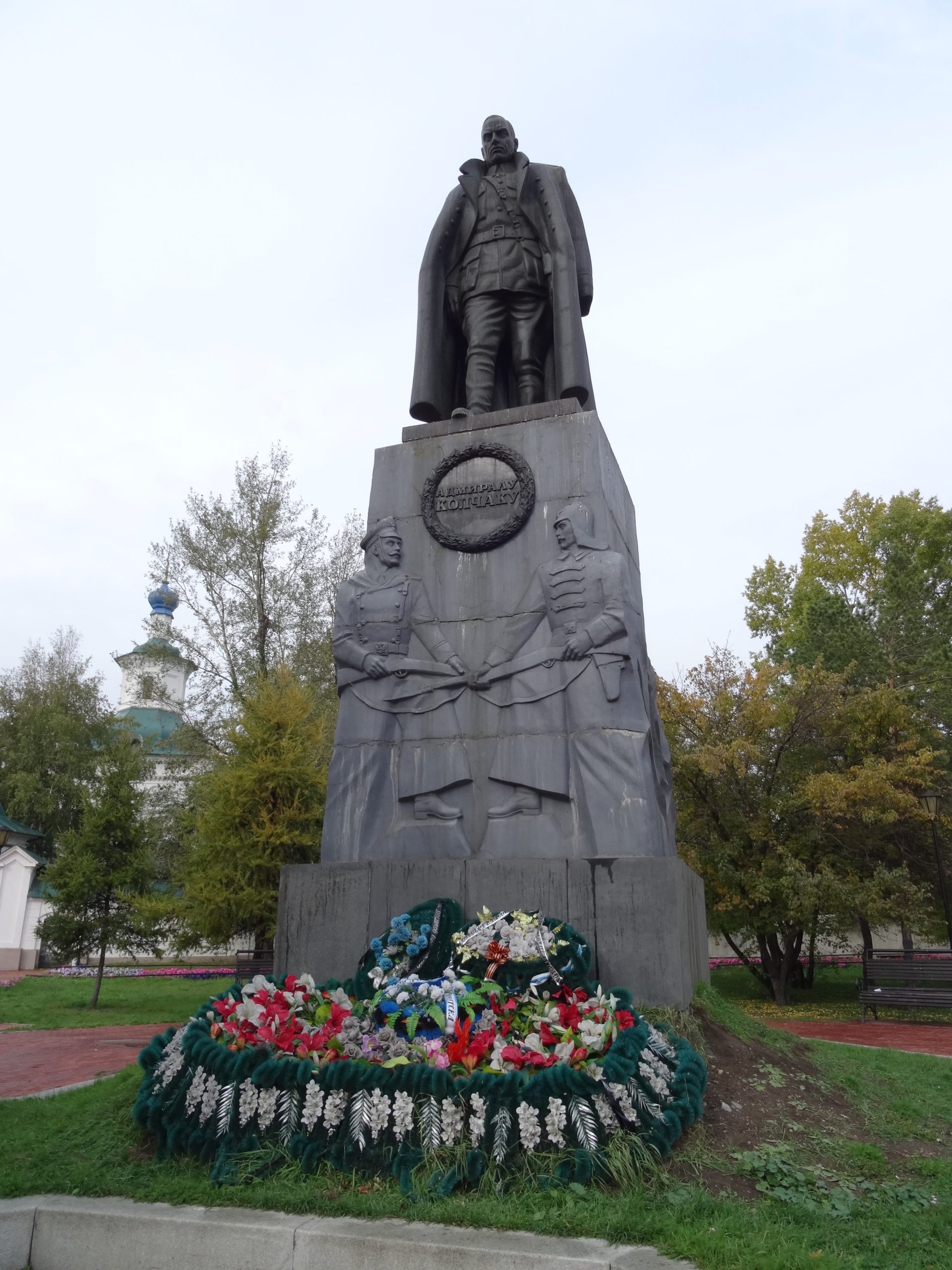
A stop over to visit Lake Bakail, the world’s oldest and deepest freshwater lake. When the Sukhov family fled on the Trans Siberian the tunnels under Lake Bakail had been blown up. We spent time in the Taiga, the famous coniferous forest belt across Siberia, and Irkutsk, a city which actually acknowledged the existance of the civil war in their museum, and recognised Admiral Kolchak, as the leader of the White Anti -Bolshevik Army with a statue located on the river bank where he was murdered and thrown in the river. Note, the wreaths at the bottom of the statue, he is still revered today.
Vladivostok
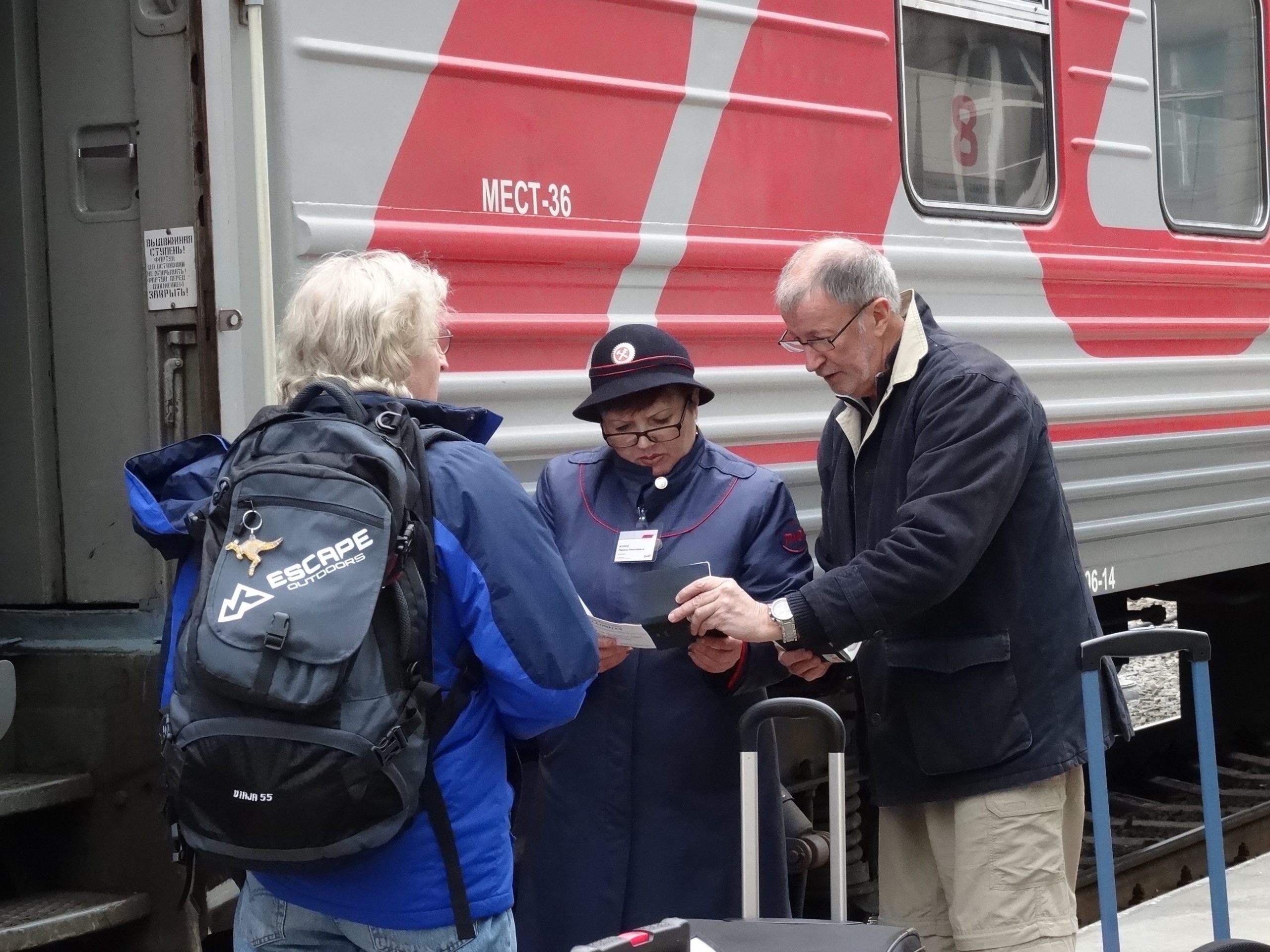
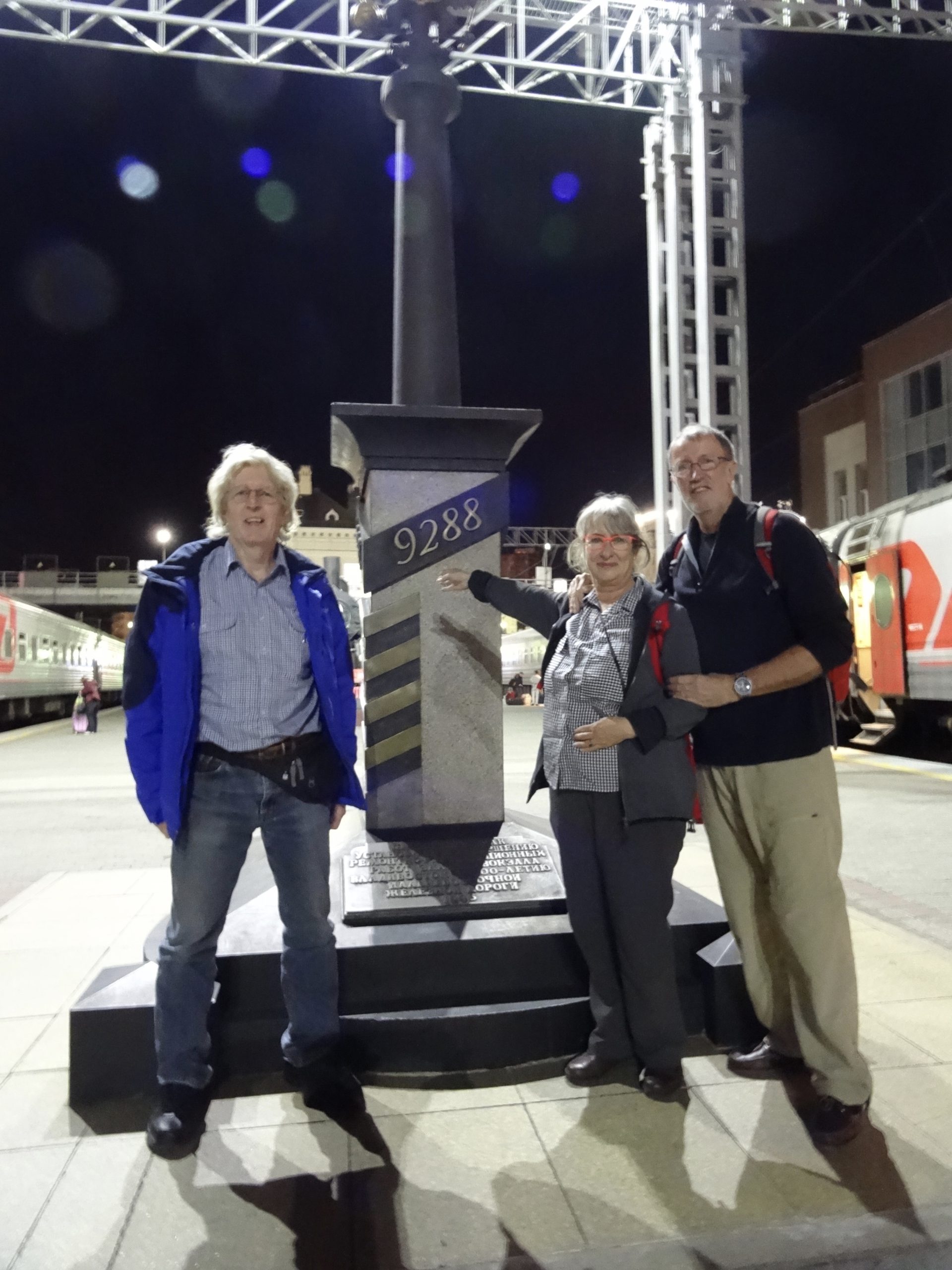
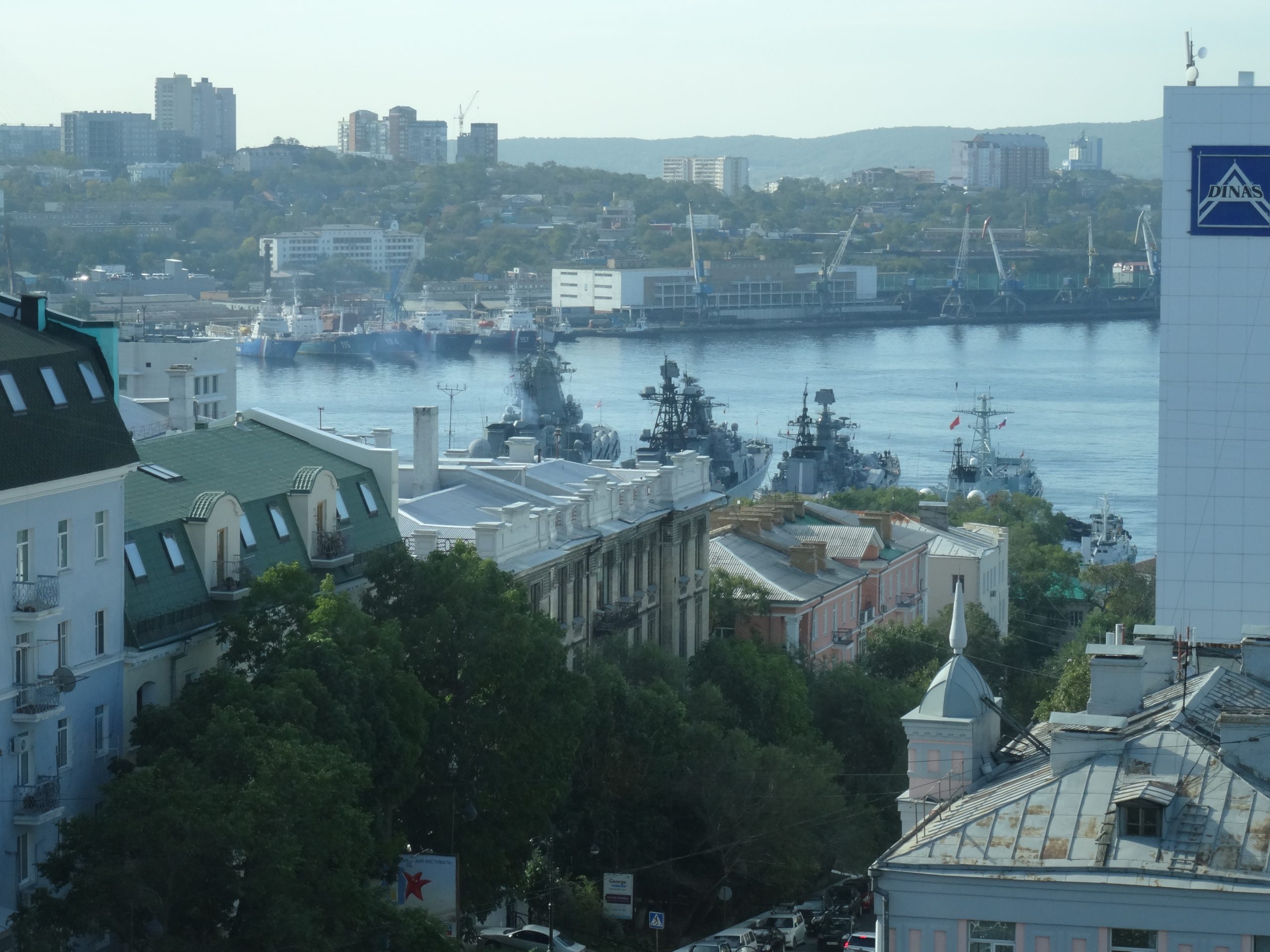
7 time zones later we arrived at Vladivostok, the end of the line. 9,288 kilometers later, we had arrived. Vladivostok was a surprise, a huge harbour, home to the Russian Pacific Fleet, and Russians who were free to express their creativity. Photos of leaving Irkusk with the providnista checking our ticks in Irkutsk, arriving in Vladivostok at night, the harbour, and